
Bob Hilton
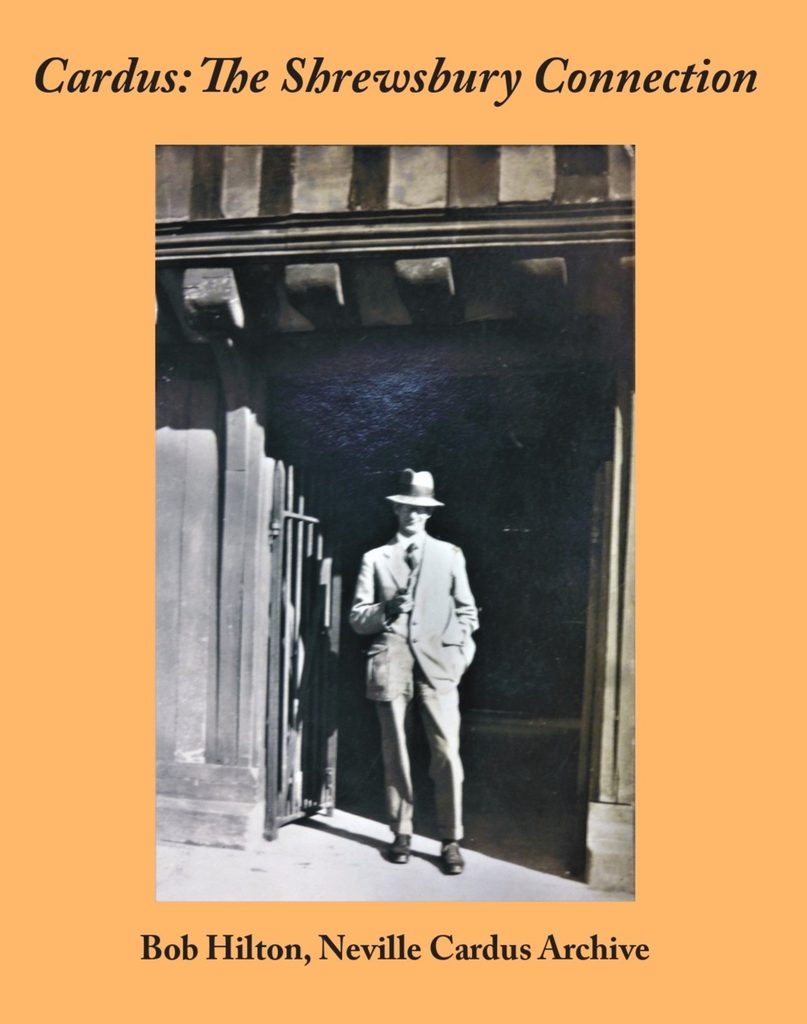
After a sketchy elementary schooling, interrupted by ill-health, Cardus can be found in the January of 1912, working as a lowly clerk in the marine insurance offices of the avuncular brothers Fleming on Bridge Street, Manchester.
Cardus was an original: both shy and assertive, and possessed of an unusual bundle of gifts and skills. He was a useful enough cricketer, although it is not clear that he exercised his talents as a slow-medium off-spinner in any but the junior leagues of Manchester and scratch games. At the same time, he had belatedly conceived a lust for learning, to which end he had set himself to a wide programme of self-education in the humanities, simultaneously steeping himself in the pages of a great regional newspaper, the Manchester Guardian, where he was particularly impressed by two outstanding music critics, Samuel Langford and Ernest Newman. Also available were the resources of Manchester’s municipal libraries and the various free classes and lectures offered by Manchester University and other educational institutions.
Paradoxically, music was not within Cardus’s personal education plan, some singing lessons apart; he felt that music came to him as a special grace. It’s likely that it was not until he became a Guardian journalist himself that he had the chance to steep himself in the grammar of music, when he understudied the great Langford, for several years, as Langford’s successor elect.
All Cardus’s reading was spiced by his participation in a circle of clerking friends who immersed themselves not in politics as such, but in the ferment of ideas prompted by a wave of new orchestral and theatrical productions. It was at one of these events, in the little theatre within Manchester’s newly opened Midland Hotel, that Cardus was first stirred to an intense need and “ache” for music, after hearing the Vilja tune from Lehár’s Merry Widow operetta, around 1905.
To all these eclectic elements, there was added, quite out of the blue, a new factor that bound everything together for Cardus, and switched his life onto an entirely new track. This factor came in the form of an advertisement in Athletic News for an assistant cricket coach, especially one that could bowl, at Shrewsbury School, one of the elite public schools and a far cry from Cardus’s home background.
A modest cricketing accomplishment, an already fluent pen (Cardus practised diligently to acquire a writing style), and a great boldness were easing open the door to a professional writer’s career for Neville, who was still using his baptismal names of “John Frederick” at the time. We can only surmise that he must have written a remarkably eloquent and convincing application form that leapt off the page, playing up his cricketing powers and conferring quasi-professional status on himself without being too specific.
And so, it came about through the power of his pen that Cardus made his unlikely way to Shrewsbury in May 1912 to take up the position of assistant cricket coach at Shrewsbury School, as understudy to Walter Attewell. A dim cricketing figure, Walter is now remembered only as a cousin of the eminent Notts and England medium-pacer, William Attewell, with Cardus apparently under the delusion that it was William himself that he was working under. Cardus always claimed that he had not realised his error, asserting somewhat defensively that, “he [William] was authentic enough in my growing imagination”. Cardus, as the brilliantly imaginative writer he was, later turned the confusion to good account by merging the two Attewells in the character of “Old William”, and featuring him in a number of essays as a fund of homespun wisdom, reliability, and cricket lore; the School itself, lightly fictionalised as “Shastbury”, also figured in a number of Cardus essays.
Cardus’s time at Shrewsbury School opens inauspiciously with an attack of nerves in a trial match. The tremendous realisation is upon him that he now has to make good the extravagant claims made for his cricketing prowess in his application letter – or make an abject return to the grey streets of Manchester. Cardus redeems himself sufficiently to demonstrate a basic competence and to work himself into a comfortable and enjoyable niche, opening up five idyllic and character-building summers for him at the School.
Those golden summers imparted social polish, confidence, and further opportunities to expand his personal “schema of culture” by study in Shrewsbury’s Public Library and also the School Library, access to which was granted to him by the charismatic Headmaster, the Rev Cyril Alington (no mean cricketer himself), who recruited Cardus to perform some secretarial duties for him after the incumbent had been absorbed into the war effort.
And here at Shrewsbury, within the pages of the Shrewsbury Chronicle, “Neville” Cardus was born. “Neville” superseded the diminutive, “Fred”, in a gradual process that began with a short, slight poem he contributed to the Shrewsbury Chronicle (“Fantasy”: Friday, July 18th, 1913). The poem was subscribed, “JF Neville Cardus”, his first known use of his self-adopted name, “Neville” – “Neville” doubtless carrying a writerly dignity that “Fred” lacked. He continued as plain “Fred” for a while in his social and school circles, before emerging in full “Neville Cardus” plumage on November 25th, 1919, as a named Manchester Guardian journalist, here writing of a music hall star’s swan song. He was soon to enjoy the world famous soubriquet, “Cricketer”, as well.
Cardus had become a presence of some quiet standing at Shrewsbury School. His personal needs were few and his income from Shrewsbury kept him through the winter months, allowing him to pursue his private studies and to attend concerts in Manchester. In the winter of 1913-14, he honed his writing and listening skills by submitting elegant but ill-paid concert notices (thirty or so) to the short-lived Daily Citizen newspaper. Walter Attewell was early replaced as cricket professional at School by the authentic Yorkshire Test cricketer, Ted Wainwright, off-spinner and capable bat – to the benefit of School cricket; of Cardus’s own cricketing knowledge and technique; and of Cardus’s fund of writer’s stories, for Wainwright was a rough-hewn but vivid and often bibulous presence.
Cardus’s Shrewsbury idyll came to an end with sickening abruptness, as part of the fall-out from Cyril Alington’s elevation to the headship of Eton. Cardus was plunged from his heaven on earth into a sepulchral underworld in the meanest areas of Manchester, spending several months in casual labour and as a collector of dues for a Burial Society. His plight finally galvanised him into applying directly to the redoubtable editor, CP Scott, for an office job with the Manchester Guardian in any capacity – a fateful step in the New Year of 1917 that led him directly into the august presence of CP Scott himself, and later into the Guardian Reporters’ Room (in which company, Cardus would have been the least formally educated by a very long chalk).
Cardus was finally on his way to fulfilling his destiny, taking his first huge strides into professional journalism and cricketing history.
(Article based on the short book, “Cardus: The Shrewsbury Connection”, Neville Cardus Archive, 2026)