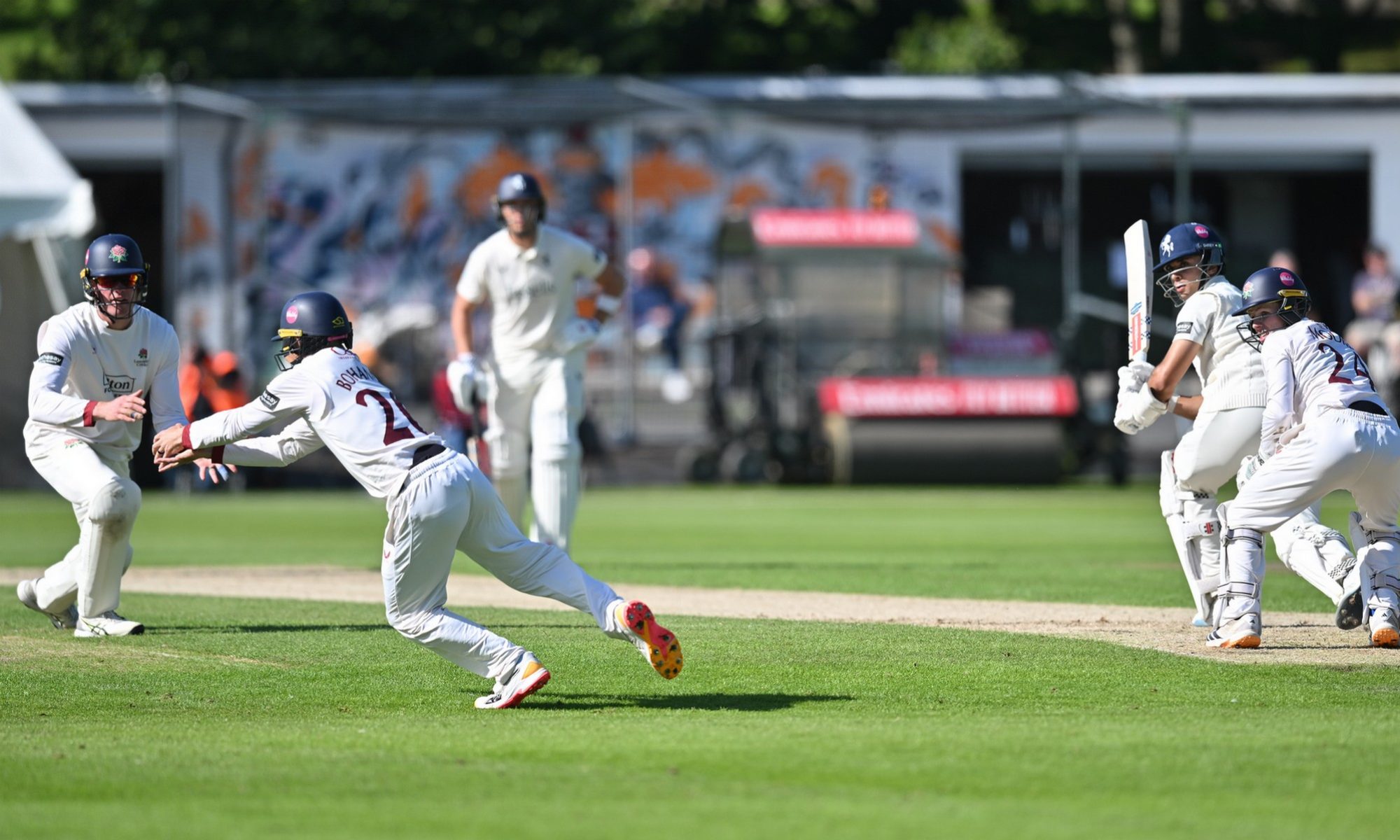
Our final speaker meeting of the season saw Paul Edwards and Graham Hardcastle speak about their new website “Lanky Lanky”, a relatively new subscription based website that covers all things Lancashire.
As Paul stood up to great applause he wondered whether that applause was for him standing up or Malcolm Lorimer, who introduced him, sitting down. It is important to note that this website will be independent comment, and will cover league clubs on occasions in Lancashire.
Why County Cricket? Why not regional? There were rumours circulating after the Strauss review that there were “smaller clubs” that were in danger of being excluded from first class cricket, “get rid of the weakest six” was the war cry heard. So this season past (2025) who was promoted from the second division, ahead of such clubs as Lancashire and Middlesex? Leicester and Glamorgan. The defence for not culling lies in the ECB’s opportunity for all; inclusion, diversity and equality. They are trying to attract more people into the game via this strategy and if we give them less opportunity to do so by limiting the number of places on offer, then they are defeating their own objectives, plus lessening the chance of finding the next Hameed of Bethell. Paul recommended the book on Brearley and Arlott entitled Arlott In Conversation with Mike Brearley:
“All test cricket is done well as a spectacle, but I love a County game at Neath or Ebbw Vale, hearing the players talking to each other …..”
Most cricket supporters have great loyalty to their county as well as their country, mostly due to the place they were born. (We have a L&CC society member who lives in Dudley but is a life member at Lancashire. His grandfather from Bolton when he was born enlisted him as a life member at Lancashire.) Paul fondly remembered his first county cricket match where Lancashire played Derbyshire in 1965, which took place at Trafalgar Road, home of Southport and Birkdale Cricket Club. Paul lives within walking distance of the ground and to this day it is still his favourite ground. Cricket involves community, and it is as much about passing on knowledge as much as playing and supporting a club. The example of James Anderson and Nathan Lyon being at Lancashire in 2025 must have buoyed both our seam bowlers and spinners. Lyon said for himself it was terrific to stand at mid-on and listen to Jimmy’s plans for his nest two balls. In turn they pass on their knowledge and experience. As an instance Paul quoted Ormskirk who have produced eight first class cricketers because they were coached by former professionals who passed on their wealth of knowledge.
Counter Press are the publishers responsible for the website. No local papers cover cricket anymore and the website is where you can read proper journalism about the county you love. Currently there are 16 websites facilitated by Counter Press, all county based and Paul believes it will be value for money.
Graham Hardcastle remembered his first foray abroad as a freelance reporter seeing Adrian Shankar’s biggest score in Barbados. Adrian, as we now know, was a bit of a Walter Mitty and he told Graham that he had played at Wimbledon, been on Arsenal’s books and signed for Toul Nadu (sic) and Graham reported it. A faultless introduction to his profession!
Graham has a £5 bet on Lancashire to win their league every year. He also puts £5 on them to be relegated as well! His only success has been 2011 so far, and he was overjoyed. At the beginning of that 2011 season he, along with Chris Ostick from the Manchester Evening News, got together with Malcolm Lorimer and decided that if Lancashire won the championship, not playing at Old Trafford due to the ground redevelopment, instead playing every home game at Aigburth, the home of Liverpool Cricket Club, then they would write a book. They duly diarised quite extensively every game and by the time they were at tea in the last game against Somerset at Taunton, they were still convinced that Warwickshire would beat Hampshire. But, as we all know, Croft and Brown saw us through and so the book was published, “Champions – About Bloomin Time”, is still available at all good book shops and some disreputable ones as well.
Graham is also the cricket correspondent for Yorkshire County Cricket Club as well. He recalls that in 2024, Yorkshire didn’t win their first 7 games but still won promotion. In contrast Lancashire in 2025 didn’t register a win in their first 7 games either, but the difference was that Yorkshire were in with a chance of winning in most of those games, whereas Lancashire lost 5 of their 7 games. We all know what happened next in Lancashire’s case and with the change of coach and skipper, Graham sees a good season ahead – will his £5 be safe?
Counter Press was started by Simon Moorshead who started a website about Swindon Town Football Club called The Moonraker, and it grew from there
If you wish to subscribe go to: –
Lankylanky.counterpress.media or Lankylanky.news and subscribe.
Don’t forget to obtain your 25% discount by entering Lanky Special on your application. Discount finishes on 28 March.
CHANGE OF SPEAKERS FOR NEXT MEETING
Former Lancashire batsman & captain Stuart Law was due to speak at our next event on Monday 23 March at 1pm, but unfortunately Stuart is currently in Nepal, where he is coach to the national team, and unable to join us as planned. We hope to rearrange his visit for the autumn.
We are sorry for the late change but trust members will understand, given the current uncertainty regarding travel arrangements due to the conflict in the Middle East.
We are delighted that journalists and authors Paul Edwards and Graham Hardcastle have stepped in at short notice to be our speakers instead.
Both cover Lancashire cricket regularly each season, and they will be talking about their newly-launched Lancashire-dedicated website Lanky Lanky, as well as all things Lancashire as the new season fast approaches.
Ashley Giles: Reflections on a Life in Cricket
The Lancashire & Cheshire Cricket Society hosted a special event at Old Trafford on 16th February 2026, featuring Ashley Giles, the Chief Executive Officer of Worcestershire County Cricket Club and a former England Test cricketer.
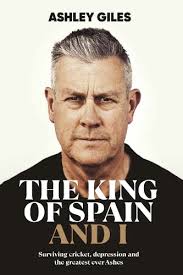
Giles shared highlights from his extensive thirty-three-year involvement in cricket, spanning his experiences as a player and administrator. His career included two years working with Lancashire County Cricket Club. He mentioned his autobiography, a project which was neither ghost-written nor rushed, having taken him eighteen years to complete amidst his wife’s illness and his own full-time professional commitments. His publisher was Malcolm Thacker.
Born in Surrey, Ashley began his cricketing journey at Ripley Cricket Club, one of England’s oldest clubs, boasting over 275 years of history. He recalled fond memories from his time there, including meeting notable visitors such as Eric Clapton.
At the age of twelve, Ashley moved to Guildford Cricket Club, where he was coached by Brian Ruby—a passionate coach known for his colourful language. At Guildford, Ashley formed a close friendship with future Surrey player Ian Ward, and together they represented Surrey youths. In one memorable match, their team dismissed Berkshire for just nine runs and later bowled out Wirral Youths for 17, having themselves been dismissed for 45. Coaches Geoff Arnold and Chris Walter, both former first-class players, guided them through a demanding season in which Ashley played 77 days of cricket.
Injuries were part of Ashley’s journey; following a serious back problem, he switched from left-arm swing bowling to left-arm spin. His comeback began with the club’s third team, where he took 6 wickets for 27 runs in 11 overs. This performance led to his return to the first team as a spin bowler.
Despite his efforts, Ashley was not selected by Surrey County Cricket Club. Undeterred, and with encouragement from his father and brother, he successfully applied to join Warwickshire.
At Warwickshire, Neil Abberley was coach and Andy Lloyd captained the county side. Ashley soon discovered the club’s strict hierarchy, exemplified by the requirement for second team players and the first team’s twelfth man to change in the indoor school.
Subsequently, Bob Woolmer became county coach and Dermot Reeve took over as captain, a figure Ashley described as a great motivator.
Ashley made his debut for Warwickshire in 1995 and was awarded his county cap the following year. He toured Australia with the England “A” team in 1996, made his limited-overs international debut in 1997, and played his first Test match at Old Trafford against South Africa in 1998. Despite being dropped two weeks later, this period marked significant personal milestones, including meeting his future wife and scoring his first county century against Derbyshire.
A tour of Pakistan and Sri Lanka followed, with Nasser Hussain as captain and Duncan Fletcher as coach. Ashley initially sensed Hussain’s preference for Phil Tufnell, yet he valued Hussain’s passionate leadership. The introduction of central contracts brought greater security to players, and Ashley praised the addition of Kevin Pietersen to the team.
He then recounted the excitement of the 2005 Ashes Series. England were soundly beaten in the opening Test at Lord’s, but Michael Vaughan urged the team to ignore the press and focus on the Edgbaston Test. Andrew Flintoff noted that Australia’s team was not as strong as in the past. Following this, the atmosphere within the England camp transformed, although the team was disappointed to only draw at Old Trafford.
At Trent Bridge, Simon Jones took five wickets in Australia’s first innings, and Ashley with Matthew Hoggard were at the crease when England secured a three-wicket victory. The run-out of the Australian captain in the second innings proved pivotal, and Ashley described the on-field conversation with Hoggard as particularly amusing.
The decisive Test at The Oval ended in a draw, ensuring England reclaimed the Ashes. Ashley recalled a quiet dinner with teammates and their wives on the fourth evening, followed by a tense lunch the next day as England faced the prospect of defeat. Kevin Pietersen’s century, however, guaranteed England’s safety.
During the event, Ashley responded to audience questions, including the story of mugs produced in his honour. The mugs bore the title ‘King of Spain’ due to a misprint, instead of the intended ‘King of Spin’.
He rated Dermot Reeve, Michael Vaughan, and Nasser Hussain as excellent captains. Ashley touched on the challenges of dealing with criticism and the prevalence of depression among cricketers, admitting he struggled with depression after losing his England place.
Ashley identified several promising young batsmen, naming Dan Latigan as one. He advocated for management approaches that protect players, such as implementing curfews, but cautioned that England is not developing enough talent to win Test series in Australia or India. He also called for improvements to pitches and for the encouragement of more high-quality cricket. Nevertheless, he acknowledged the importance of ‘The Hundred’, noting that some counties might not survive without it.
Ashley concluded his talk with a humorous account of the post-Ashes celebrations in 2005, leaving the audience both entertained and reflective on his remarkable career.
Victor Black
New Lanky Lanky website
Paul Edwards and myself, Graham Hardcastle, are soon to be launching a new website dedicated to independently covering Lancashire Cricket.
It will be led by coverage of the county club but certainly not exclusively so. We want to try and cover as many aspects of cricket within the county as possible.
The website, Lanky Lanky, launching March 1, is part of the CounterPress Media Group and is one of a number of county cricket sites which have either already launched or will be doing so soon.
There will be features and news, and it’s a subscription based site.
Expressions of interest are already open at http://www.lankylanky.news
It’s an exciting project, and we can’t wait to get started.
Roll on the summer.

TALES FROM DOWN UNDER – FOURTH TEST, MELBOURNE
Geoff Wellsteed is in Australia for the Ashes and sends his reflections after the fourth Test at Melbourne.
The National Lottery is quite a simple game really. Strictly regulated, you buy a ticket and hope your numbers come up.
The Melbourne Test was rather a more complex lottery where the playing conditions were uncertain, and low numbers were particularly prominent. A post-match inquest will inevitably investigate how such a surface, which heavily favoured the bowlers, could have been deemed as satisfactory for such a showpiece event. Don’t be surprised if the curator is in the dole queue before too long.
England love a run chase, (so why did they decide to bat first on two occasions earlier in the series?), and eventually got over the winning line but not without a few scares. Set to score 175 batting last after twenty wickets fell on Day 1, (Aus 152, Eng 110) and then Australia were dismissed in less than two sessions on Day 2 for 132, was a steep climb.
Duckett batted like a drunkard but squeezed out 34 vital runs, Crawley the Tonbridgian with 37 runs, along with 40 from Bethell who was born in Barbados but educated at Rugby School, both looked rather more assured. The latter, only 22 years, without a first-class century and in front of 90k+ spectators contributed a very well made 40 when under huge pressure. How proud would his late grandfather, who played first-class for Barbados between 1964 -70, have been of his achievement? Very.
Root (15), Carse (6) and Stokes (2) all made minor scores before perishing, but in came Brook and with a few outrageous hits won the match for the visitors. The Barmies, waved their flags, and went through their repertoire of songs while the Aussies sat glumly, barely believing what had unfolded before them.
Expect to see a lot more of Jacob Bethell over the next decade. Had he got 50 (no one did in the entire match) and been there at the conclusion of the contest he might have got the Man of the Match award, but that rightly went to Josh Tongue for his seven wickets. He finished the first Aussie innings with consecutive ball dismissals but was denied the new ball by Stokes at the start of the second innings. Given that Boland, out for a golden duck, was the last Australian wicket to fall in their first knock and then opened as nightwatchman in the second, Tongue could possibly have achieved a hat-trick and have had the same batter out twice in consecutive balls! The mean England captain denied him that chance and the statto’s the opportunity to record a unique hat-trick. Shame!
Perhaps the biggest surprise of the Test was the fact that Mitchell Starc was not the influence he had been in the first three matches. Like Boxer in Animal Farm, he had worked so hard but, perhaps, was spent? Not quite like Orwell told it but on this occasion, the lions beat the kangaroos. Lovely jubbly!
Finally, a quiz question. Five England cricketers have been born on Christmas Day. Name them! PS…from my last blog…..the nine England Test players with only three letters in their surname are:- Kabir Ali, Moeen Ali, CB Fry, Leslie Gay (double International) Rob Key, Harry Lee, Peter May, Chris Old, and Jason Roy.
TALES FROM DOWN UNDER – THIRD TEST, ADELAIDE
Geoff Wellsteed is in Australia for the Ashes and sends his reflections after the third Test at Adelaide.
Do you believe in miracles? Do you think the impossible can, very occasionally, be achieved?
Well, on the morning of Day 5 a good number of England supporters were unduly optimistic about England’s prospect of chasing down 435 runs, and especially when the target was reduced to less than 100 with three wickets still in hand. Of course, it was never going to happen, but it must be said England did restore a degree of respectability by only losing the match by 83 runs.
To rewind. England went into this match at rock bottom after two crushing defeats, and after Australia had scored 371 in their first innings. Then the Poms had been reduced to 42-3 and things had plummeted to new depths. Now, the harsh reality is that England have lost the Ashes series in 11 days.
Criticism is rife. Mc Cullum’s commitment to Bazball has been trashed. Ironically, the only cricketer on the field capable of playing that style of the game is an Aussie! Travis Head is a belligerent hitter and his admiring fans are now wearing ‘Travball’ printed Tshirts!
So what have we gleaned thus far? Talented but inconsistent, Crawley played an innings of class and maturity and is England’s leading scorer in the series (despite a pair in the first Test). We need more big scores from him.
Duckett clearly does not understand the science of magnetism. By playing virtually every ball he attracts the edge. Ben, learn the meaning of repel! Pope has lost his faith. He needs spiritual help from a sabbatical. Surely he can’t play at the MCG cathedral of cricket?
Root is struggling a bit but is a fixture. First name on the teamsheet. Brook is the most talented boy in the class, but is a cad. He reels off a string of glorious strokes and then gets out to the most outrageous, irresponsible shot. The headmaster must give him a hundred lines, ‘ l must not be a silly boy’.
I’m sorry, but Jamie Smith is not a wicketkeeper. He is the worst England gloveman in my memory. If you think that is an unfair assessment than tell me who has been an inferior performer since, say WW2.
Stokes has to play but apparently there is some disharmony in the camp? He needs to sort that. He visibly had an onfield spat with Archer. I’m sure Will Jacks is a wholehearted cricketer and a lovely lad, but he is not the best spinner in England. I can honestly say I have seen much better spinners in club cricket. The Aussies treated him with contempt (2-105 and 1-107).
No one can doubt the commitment shown by Carse, but he can’t, or won’t, or more likely is under instruction, to bowl short. Bowled and LBW are dismissals ruled out if you continually deliver bouncers. He must bowl length and line. Archer had a good match with bat and ball. Tongue was solid and made a decent contribution.
Overall, it’s a sad story and even more depressing is the fact that if a best XI were to be selected from the two teams l think only two Englishmen, possibly three, Root, Stokes and Brook would be guaranteed a place. That ratio tends to suggest to me at least one more defeat in the series?
Despite all the gloom here is a little brainteaser for you. How many England Test players can you identify with only three letters in their surname? I’ve got nine.
FREE EVENT! DR MICHAEL COLLINS – WINDRUSH CRICKET
Emirates Old Trafford, 28 January 2026 2pm – 4pm
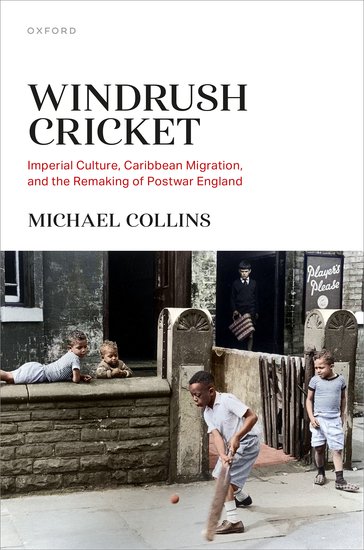
Dr Collins will be discussing his recently published book Windrush Cricket, exploring the historical and contemporary significance of cricket for Caribbean migrants to Britain and teasing out some of the Lancashire stories featured in his research.
For further information click here to download our PDF with full information.
ROLAND BUTCHER – BREAKING BARRIERS
Our Christmas meeting at the Avenue Methodist Church in Sale was another great success. Not only did we have a great speaker, but coffee and homemade cakes in abundance. (One member brought his own box so he could take some away with him!!!)
Barbados-born Roland Butcher secured his place in history when he became the first black player to represent England, making his Test debut at Bridgetown in 1980-81 (the headline in the local paper was “Our boy, their bat”). Roland was a batsman capable of playing the most thrilling, attacking innings.
He spoke about his time with Middlesex and what it was like to have Mike Brearley as a captain (he would listen to the young players). He moved to England at the age of 14, joined Middlesex in 1974 and was picked for two ODIs against Australia in 1980 on the strength of county form.
Roland spoke very movingly about his doubts about going on the rebel tour to South Africa, his withdrawal which resulted in paying a lawyer to get out of his contract, and then the tour was cancelled after Nelson Mandela’s release.
He gave a very honest account of his cricketing days and was well received by everyone. He brought his book, Breaking Barriers, along which sold well.
Malcolm Lorimer
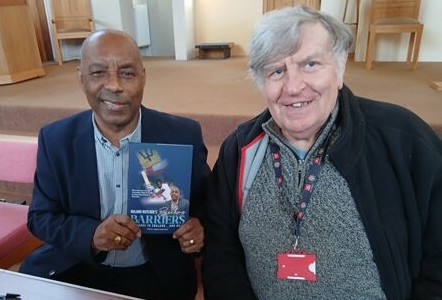
Roland Butcher with Malcolm Lorimer
TALES FROM DOWN UNDER – SECOND TEST, BRISBANE
Geoff Wellsteed is in Australia for the Ashes and sends his reflections on the second Test at Brisbane.
As certain as the Nunc Dimittis always follows the Magnificat it was a sure-fire thing that England would lose wickets early on Day 1 to Mitchell Starc. And so it proved – England were two wickets down after 2.3 overs! Duckett and Pope both back in the hutch with blobs against their respective names. Later Jamie Smith and Brydon Carse also suffered the same fate, and had that annoying little yellow duck running across the TV screen.
Joe Root, chest puffed out, was magnificent and recorded his long-awaited maiden hundred down-under (138 not out). Crawley, reeled off a string of exquisite shots, but he plays so loosely he never gives the impression of longevity at the crease. Gone at 76 when a big hundred was required. He was bowled by, surprise inclusion, Michael Neser who bowls, like Boland, medium-fast, length and line. You miss, l hit. It was a case of a Tonbridgian, dismissed by a guy with a second forename of Gertges, once of Todmorden and born in the Transvaal.
Disgracefully, Brook and Smith gave their wickets away with poor shots. Archer, sporting a heavy gold chain round his neck, which glinted under the floodlights, saved the day with some belligerent hitting but was 325-9 enough on a blameless surface? At least it gave the Barmies something to be buoyant about in the very few pubs which remain open here after 9.30pm.
Day 2 was a complete and utter shambles. Poor leadership from Stokes, persistent short bowling, weird field placings and schoolboy fielding errors. Dreadful is a fair descriptor. Every one of the Aussies reached double figures and had secured an overnight lead of 44 with four wickets still in hand. England are staring defeat in the face.
If Day 2 was hapless then Day 3 was even worse. Australia, (who, by the way, never miss an opportunity to taunt the Brits and greeted them at Brisbane air terminal with a huge illuminated sign displaying the message, Convicts 1 Poms 0), extended their innings to an all-out total of 511. By the close England were shamefully 134-6 in thirty-odd overs.
The Gabba(toir) is located on Vulture Street and like raptors the Aussies ripped England apart. The tourists embarrassingly surrendered like a family of small garden birds (of which great, blue and long-tailed are varieties).
On Day 4 Stokes and Jacks showed that a modification of Bazball is an option and both batted sensibly through a session and a half and added 96 to the score at barely three an over, but once they had both been dismissed at 224 and 227 the last four reverted to Bazball tactics and added a mere 14 runs. The hosts wasted no time in scoring the 69 runs needed for victory in ten overs.
Twenty thousand Aussies turned up the volume and loved the humiliation of the old enemy. The Barmy Army, ever faithful and always amusing, retaliated with an adaption of the National Anthem singing…..’long to reign over YOU’!! But not as things stand on the cricket field.
Starc, married to Alyssa Healy, was the Man of the Match with 8 wickets and 77 runs. It occurs to me they may be the first heterosexual married couple to play Test cricket since Roger and Ruth Prideaux? Must check that.
Next stop Adelaide.
TALES FROM DOWN UNDER – FIRST TEST, PERTH
Geoff Wellsteed is in Australia for the Ashes and sends his reflections on the opening Test at Perth.
Dejection (day 1 afternoon, England 172ao). Elation (day 1 close, Australia 123-9). Optimism (day 2 afternoon, Australia set 205 to win). Humiliation (day 2 evening, Australia win by 8 wickets).
These four simple one word descriptors vividly sum up this two-day crazy extravaganza. The whole match aggregated a mere 141.1 overs. What can we say and learn from the ashes of this first exchange? Well, when winning the toss, the accepted norm is to bat, but the current England team profess to prefer chasing.
When they won the spin of the coin they elected to bat. What influenced the change? England had the quickest bowlers. Both Archer and Wood (150 km per hour) bowled faster than Starc, but the left arm Aussie has the ability to wobble the ball. High quality wobble seam at 145km is more difficult to play than out and out pace. Giving him, the best three-format bowler in the world, first use of a pitch that the experts said would be at its best for batting on day 2 was, arguably, suicidal.
Traditionally Perth pitches offer steep bounce that makes England’s commitment to Bazball a high-risk strategy until batters can get in and adjust to the conditions. Patience is a virtue, but apparently outwith the approach of the visitors. OK, Travis Head played ‘Bazball plus’, and had a strike rate of 148, but he is very familiar with the rock-hard surface. England are not and stubbornly, avoided warm-up matches. Head was exceptional (and so is his high-sided haircut!). He treated all the England quicks like naive net bowlers.
Brendan McCullum has a reputation as a great psychologist, but trying to rebuild the shattered confidence of a Stokesy team will require a biblical miracle. Never, before have l seen the England captain look so deflated and helpless as he did for the entirety of Australia’s second innings.
There are vast numbers of England supporters here and they undoubtedly deserved more application from their team. Instead, they were on the end of some fearful ridicule from euphoric Aussies who love nothing more than to indulge in abusive pommie bashing.
Footnote
It had absolutely no impact on the result of the match, but Jamie Smith was given out caught on review by the third umpire after a five-minute examination of the available footage.
Apparently, the technology used over here (different from England) has a two-frame gap between the pictures and the sound wave. Former, highly respected international umpire, Simon Taufel, said that the conclusive evidence protocols with the real-time snickometer are such that if a spike is evident up to one frame after the ball has passed the bat that is conclusive evidence of a legitimate dismissal.
He concluded the third umpire could, and should, have pulled the trigger much quicker. All that might have some technical justification, but it is extremely difficult for more than 50,000 spectators watching on the big screen to be convinced by such logic when the spike occurs after the ball is beyond the bat. And you thought football’s VAR was bad!!